“No one is to pursue what he judges better for himself, but instead, what he judges better for someone else. To their fellow monks they show the pure love of brothers; to God, loving fear; to their abbot, unfeigned and humble love. Let them prefer nothing whatever to Christ, and may he bring us all together to everlasting life.”
–Rule of Saint Benedict, Ch. 72
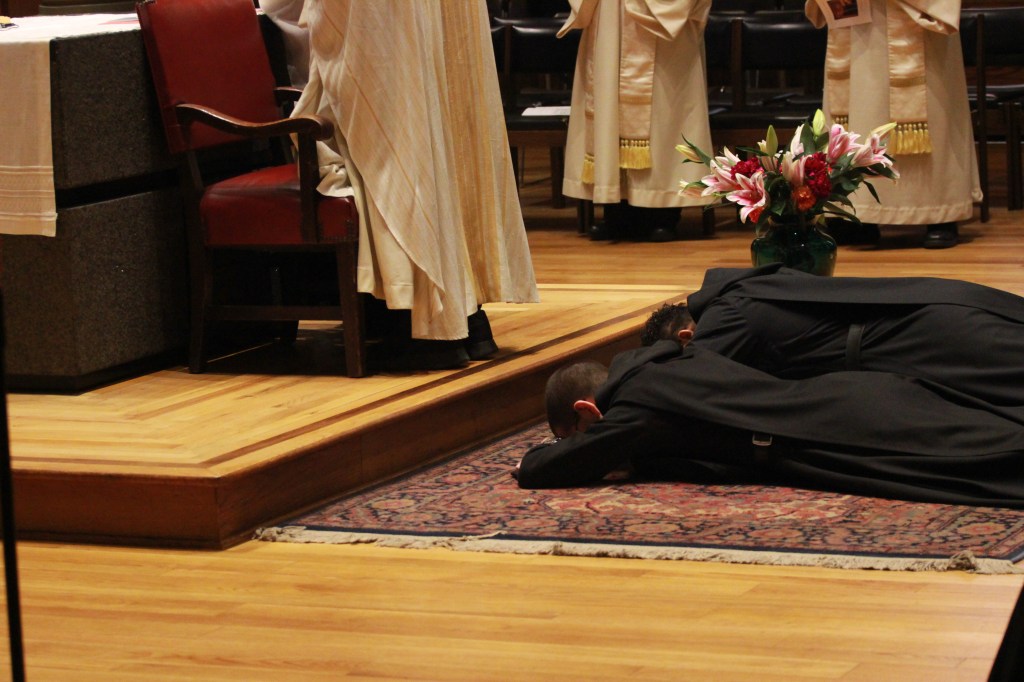
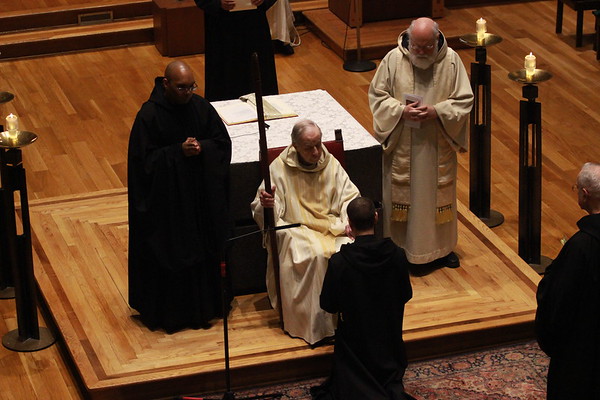
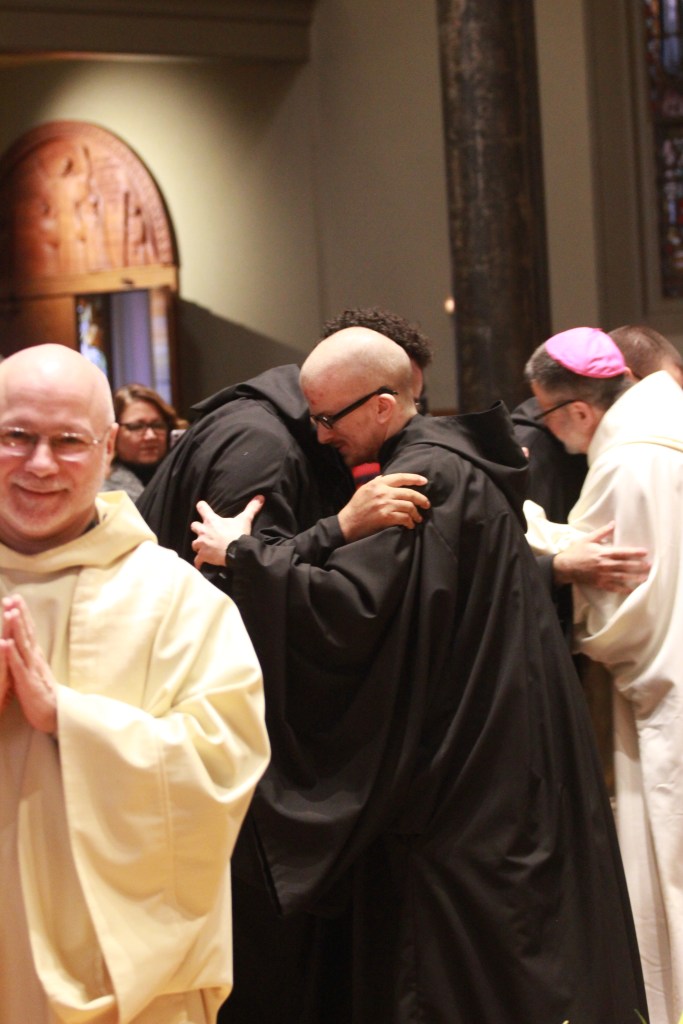
This past weekend, I had the pleasure of attending the solemn profession of monastic vows for two of Newark Abbey’s members: Br. Simon and Br. Asiel. Both men have lived as monks in this monastery for several years, first as postulants (candidates for monastic life), then novices (“new” or “beginner” monks), then for a few years in their simple vows. The final step in becoming fully professed members of the monastery is solemn vows– pledging to remain in the monastery and remain a member of the community for the rest of your life.
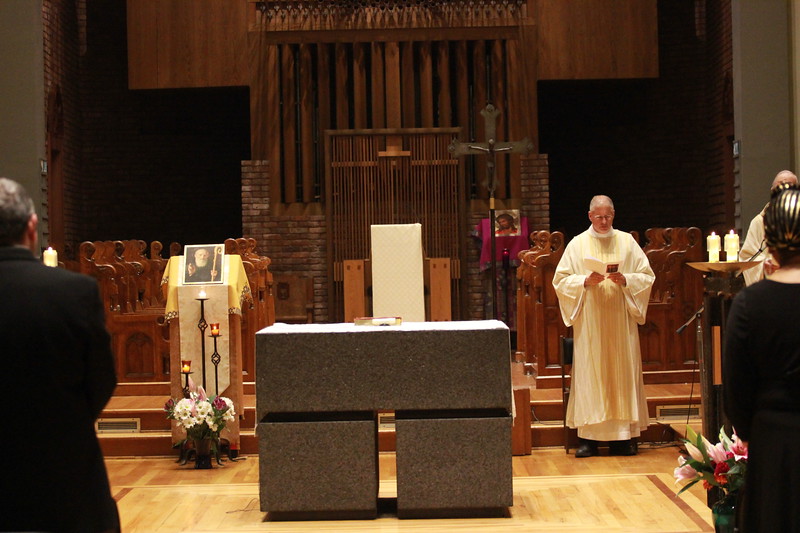
Profession of solemn vows usually ends up being quite the celebration, and it’s usually compared to a “wedding”. Originally, there were planned to be 300+ guests, with a huge reception afterwards. With the state that the world is in, that number slowly shrank– from friends and family, to close friends and family, to immediate family, and then to the final number of three. Three guests. Out of several hundred.
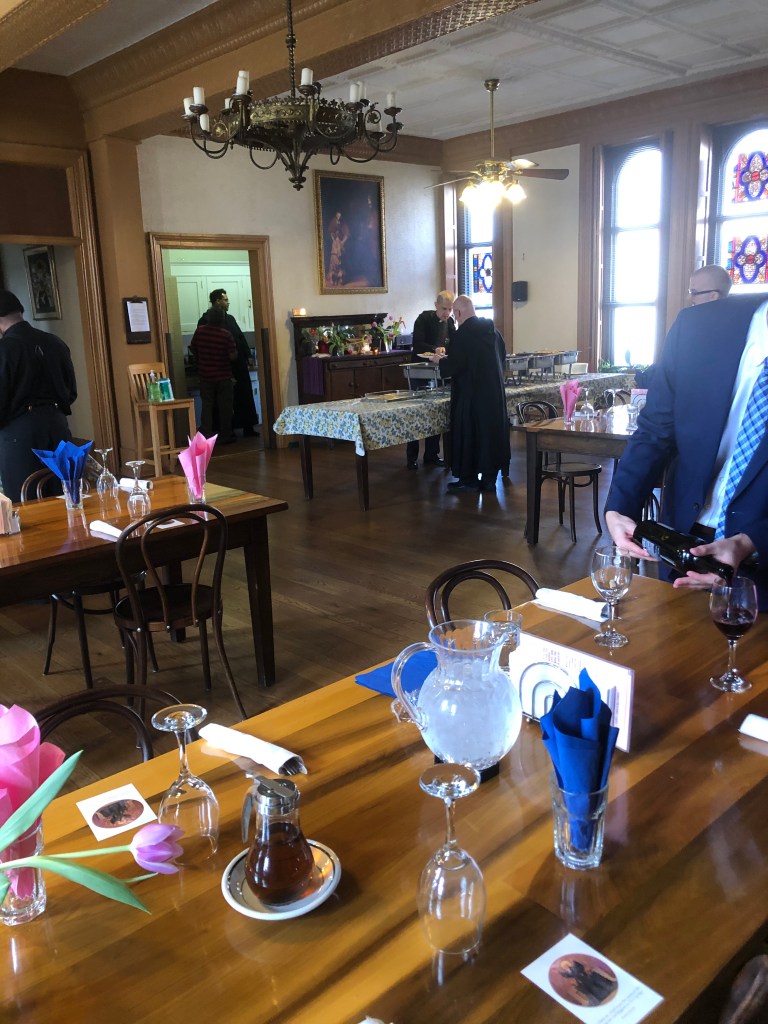
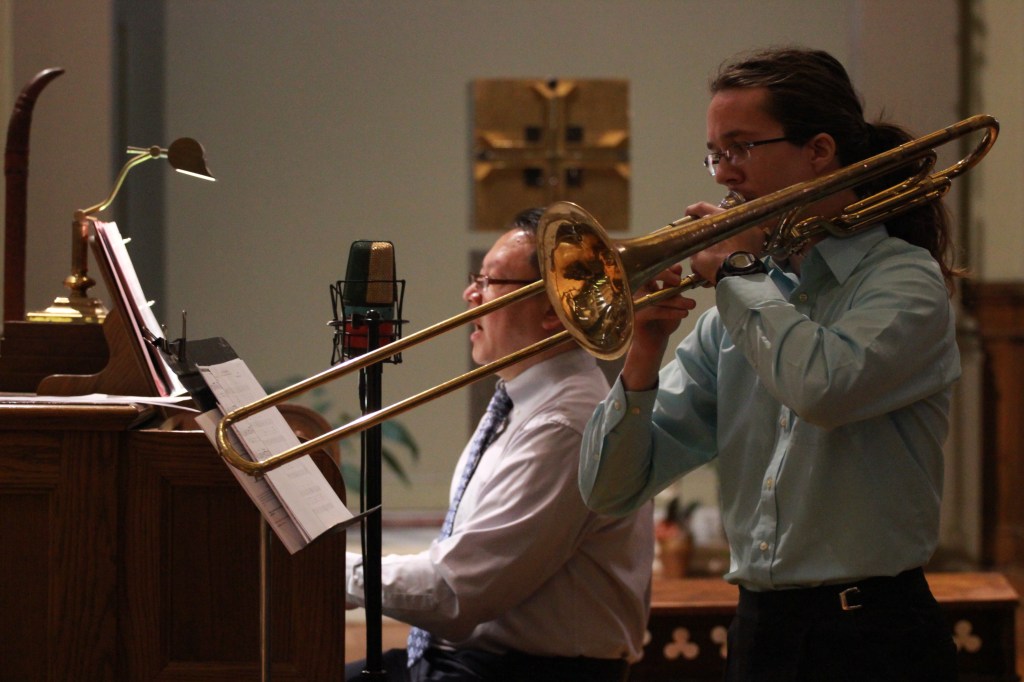
While the joy of the celebration was already tempered, there were some practical considerations to think of as well, such as who would provide the music and photography– things that had been planned for months, but were now suddenly upended. If you haven’t guessed by now from the incredible photo quality in this post, the duty of photography fell to me. James Mello and Kevin Lamb (two other volunteers) helped provide the live-streaming services, and assisted in playing the music, respectively. Even though I had very little (read: no) experience with a camera, I was more than happy to help out, and I know the other volunteers were glad to be a part of the big day as well.
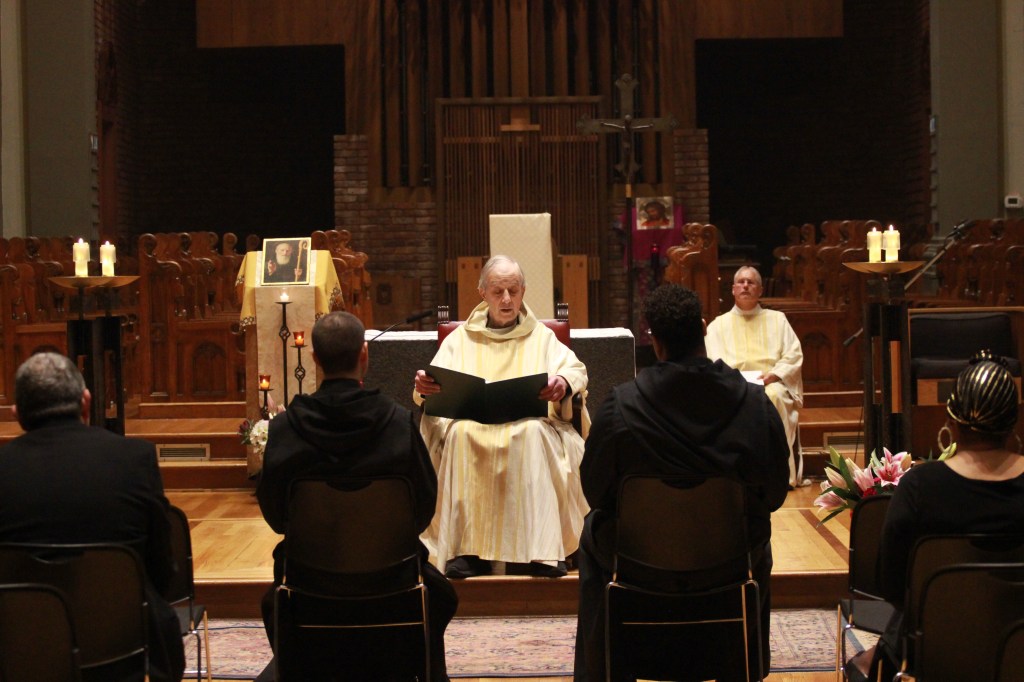
The service itself is relatively simple, and takes place alongside the mass (as most Catholic celebrations do). During the service, it was hard to not be struck by the momentousness of what those two men were doing: giving up their own wills, and pledging themselves to the service of this monastery and community for the rest of their lives.
It may be just my modern, millennial, American spirit, but the idea of committing to ANYTHING for life fills me with terror (sorry, Hallie). We crave choice, freedom, and the ability to move from experience to experience with whatever is going to fulfill us most at that moment. Imagine pledging to remain at the same job forever? Or at the same house? Or following the same set of rules for the rest of your life? Our spirits rebel against confinement and rules, and we think we’re at our most happy when we have unlimited choices at our disposal.
Saint Benedict saw things quite differently than we do. He saw the value of stabilitas as essential in providing the safety and security necessary to foster real human growth and connection. Living “without roots” only fosters insecurity, fear, and a lack of growth. Living a consistent life with a clear structure and order is central to Benedict’s ideas about the flourishing of a person and an individual community. Most importantly, it makes it easier to hear the voice of God.
I hope in this tumultuous time that we’re all having an opportunity to live a life with some stabilitas. If anything, this social isolation is making us take a step back and examine the foundations of our own lives– the places where we live, the people that surround us, and the daily tasks that make life worth living. As unsure as these times are, I find security in my daily routine and the idea that I can continue living like this today, tomorrow, and for however long it will take until a solution is found. Now I just need to work on the “self-denial” that Benedict mentions in his Rule.
I hope you’re all staying safe and healthy,
Jack Barsody
 The Monastic Intern